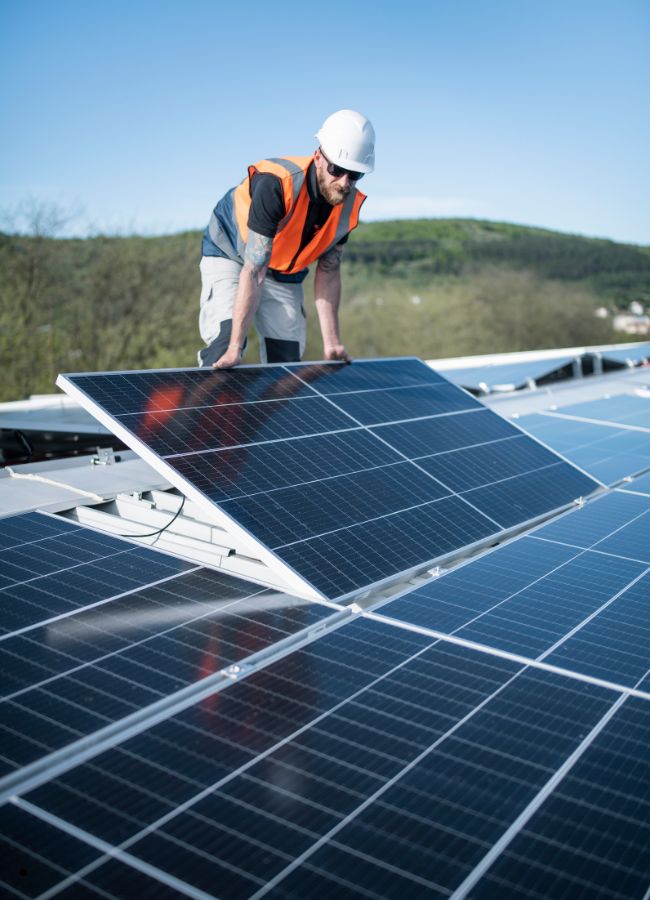
If you’re in Melbourne and thinking about the addition of a solar battery to your solar system, you’re not alone. Falling battery prices, new federal discounts, and the desire for backup power make battery storage one of the hottest home upgrades in 2026.
This post walks you through the hands-on choices, what types of batteries exist, which brands people pick in Australia, how incentives change the math, and a modest checklist to support you pick the right system for your Melbourne home.
Why a Solar Battery for Home Might Make Sense for a Melbourne Home?
For a Melbourne home, a solar battery makes noteworthy financial sense as it permits you to store your excess daytime solar power and use it during the expensive evening peak periods (classically 3 pm to 9 pm).
This maximises your self-consumption, intensely reducing how much high-cost electricity you essential to buy from the grid, particularly since feed-in tariffs for exporting power are often very low.
Furthermore, a battery provides vital backup power during blackouts, which can offer noteworthy peace of mind, and the Victorian government often offers rebates or incentives to help reduce the preliminary installation cost.
- Lower electricity bills / higher self-consumption. Batteries let you store daytime solar for evening use instead of exporting it to the grid at low feed-in rates. That means more of your rooftop power is used at home.
- Backup power and resilience. With more extreme weather and occasional outages, a battery can keep essential circuits running.
- Government support is improving affordability. The Commonwealth’s Cheaper Home Batteries Program (started July 2025) offers discounts of roughly around 30% on eligible small-scale batteries; Victoria also runs solar programs and guidance through Solar Victoria. These incentives significantly improve payback economics.
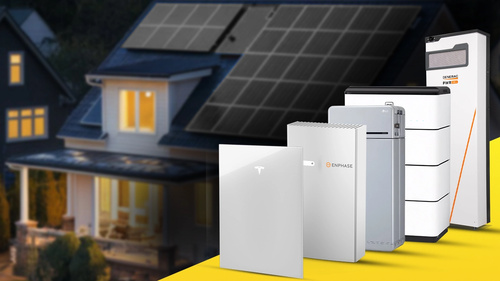
Types of Batteries & Chemistry — What to Choose
The residential solar battery market is chiefly conquered by Lithium-ion (Li-ion) batteries, prized for their high energy density, long cycle life, and low maintenance. The most common Li-ion sub-type used is Lithium Iron Phosphate (LFP or LiFePO4) chemistry, which is favoured for its enhanced safety (low risk of thermal runaway) and extremely long lifespan.
An older, more budget-friendly alternative is the Lead-Acid battery, which uses lead and sulfuric acid but has a shorter lifespan, requires vigilant maintenance, and offers a lower usable capacity (around 50% Depth of Discharge or DoD) compared to Li-ion’s 80-100% DoD.
Emerging technologies, like Flow batteries and Saltwater batteries, are also being developed for large-scale and home use, offering very long lifespans and outstanding safety, though they currently have lower energy density and higher upfront costs.
Lithium Iron Phosphate (LFP / LiFePO4)
- Pros: Best-in-class safety, long cycle life, stable at higher temperatures — increasingly the industry standard for home batteries.
- Cons: Slightly lower energy density than older NMC chemistries (but that rarely matters for a fixed wall-mounted unit).
Nickel Manganese Cobalt (NMC) and other Chemistries
- Pros: Higher energy density (smaller physical footprint for the same kWh).
- Cons: Historically, more thermal management is required and shorter cycle life vs LFP — numerous manufacturers are switching away from NMC for home systems.
Bottom line: Choose LFP where available, as it gives better safety and longer usable life for homes.
AC-coupled vs DC-coupled (installation style)
- AC-coupled: Battery connects on the AC side (after the inverter). Easy retrofit to existing solar arrays, compatible with microinverters and many inverter brands.
- DC-coupled: Battery connects on the DC side (before AC conversion). Can be slightly more efficient when paired at design time with compatible hybrid inverters, but retrofits can be complex.
If you already have an inverter and panels, AC-coupled tends to be simpler and typically cheaper to retrofit. If you’re installing a new solar + battery system from scratch, a DC-coupled hybrid inverter+battery solution may be worth comparing.
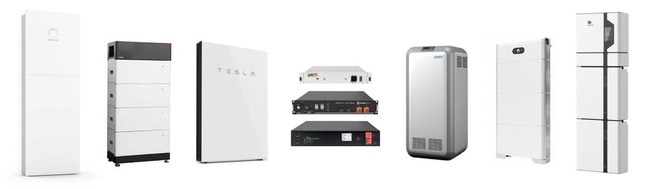
Well-known Solar Battery for Home Brands Available in Australia (and what they offer)
The Australian market features a modest range of established and emerging solar battery manufacturers. Tesla Powerwall remains one of the most noticeable and premium brands, known for its sleek, integrated design and strong mobile app control.
Global powerhouses like BYD (Build Your Dreams) are vastly prevalent, offering robust, long-lasting Lithium Iron Phosphate (LFP) chemistry in their modular battery boxes, often paired with inverters from brands like Fronius or Sungrow.
Key players also include the inverter specialists, such as Sungrow and Alpha ESS, who deliver integrated, cost-effective, and scalable solutions with strong local support and warranties, making them favourites among many Australian installers.
Lastly, brands like Enphase emphasise on a highly modular, AC-coupled system with built-in micro-inverters, which is often favoured for safety and ease of retrofitting to existing solar setups.
These brands are commonly recommended and available through Australian installers:
- Tesla Powerwall (Powerwall 3 in market 2024–25): High integration, strong backup capability and monitoring, well-known installer network. Popular choice but often priced at a premium.
- Sonnen: German-designed systems with smart energy management and long-life LFP chemistry options. Strong local support in Australia.
- LG / LG Home Battery: Compact form factor and Australian distribution; LG’s home battery products remain a common option.
- BYD (Battery-Box) / other modular brands: Good modular scalability, useful if you want to expand capacity in future.
There are many other makers (Alpha-ESS, GoodWe, Sungrow, PylonTech, etc.), local installer networks and warranty support matter as much as the brand name.
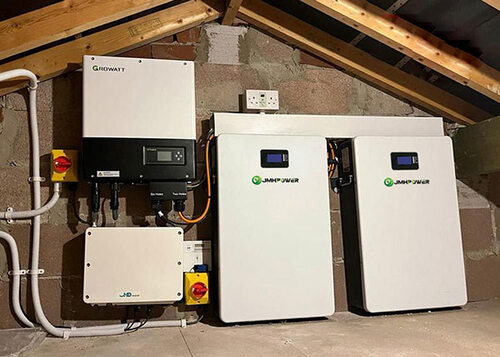
Safety, Reliability and Independent Testing — what to watch for
- Independent trials (for example, long-running solar battery trials and Choice/ITP testing) have found that not all batteries perform equally in longevity tests. Look for trustworthy independent test results and long-term performance history.
- Battery recalls and security notices do happen. For example, past Powerwall 2 recalls were broadly reported internationally. Always check current manufacturer notices and ensure that your solar system installer will manage firmware/support and any recall actions. (This is part of vetting an installer.)
Sizing a Battery for a Melbourne Household — Simple Rules
- Estimate evening/night usage. If your household uses ~10–12 kWh after dark, a 10 kWh usable battery will cover most nights.
- Think in usable kWh, not nameplate. Some vendors quote gross capacity; ask for usable capacity and recommended DoD (depth of discharge).
- Match power (kW) to needs. Backup or heavy appliance running requires higher continuous output (kW) — e.g., EV charging, ovens, pumps. Some batteries have high kW output for short bursts; others prioritize steady output.
- Consider expansion. Modular systems (e.g., BYD) let you add capacity later, but compatibility and warranty specifics matter — ask the installer.
Economics: Cost, Rebates and Payback
- Upfront cost: Characteristic installed prices vary by brand, capacity and installer. Tesla and premium integrated systems are at the higher end; modular / local brands can be cheaper. Current buyer guides put a distinctive installed cost for a single Powerwall-class unit in the mid-to-high thousands (AUD) — check current quotes for accuracy.
- Rebates: The federal Cheaper Home Batteries Program (from mid-2025) provides considerable discounts (capped and phased), which materially progress payback and, in many cases, reduce upfront cost by roughly 30% for eligible systems. State-level programs (Solar Victoria) also offer guidance and sometimes separate incentives for solar installs. Always confirm eligibility and whether the installer contributes to the program.
Tip: Get 3 quotes from accredited installers, compare installed price after rebates, warranty terms, and estimated annual savings.
Installation, Standards and Local Rules
- Installations in Victoria must comply with Australian standards (e.g., AS/NZS 5139) and local distributor/network rules. Placement matters (out of direct sun, correct clearances, fire-rated barriers where required). A qualified solar system installer will evaluate the location and electrical compatibility before quoting.
- Confirm your installer is accredited, provides system commissioning, and registers the battery with any appropriate programs (some rebates require installers to be approved participants).
Quick Decision Checklist — What to Ask Your Installer
- Usable capacity (kWh) and continuous power (kW). What will cover my typical night usage?
- Chemistry and safety. Is it LFP? What safety certifications and IP rating?
- Warranty & performance guarantee. Years, cycles, and retained capacity at the end of warranty.
- Total installed price after rebates. Who applies the rebate — me or the installer?
- Compatibility & future expansion. Can I add more capacity later? Any brand/firmware lock-ins?
- Backup capability. What circuits will be backed up in an outage? How long?
- Network approvals. Will you handle the grid-connection paperwork and meter/smart-meter commissioning?
- Service & support. Local support, response time, software updates, and who to call for emergency support.
Example Use-cases and Recommendations
- Small household with modest night loads (4–8 kWh/night): Consider a 5–10 kWh usable battery from a reliable brand (Sonnen, LG, BYD), AC-coupled retrofit if panels already exist.
- Larger family or wanting full backup: Multiple Powerwall units or a higher-capacity modular BYD / Sonnen system with sufficient kW output. Ensure the inverter and system are sized for backup loads.
- Tight budget but wants future growth: Choose a modular battery or a hybrid inverter that’s “battery-ready” and add capacity later.
Final thoughts
There’s no single “best battery for everyone” in Melbourne. It depends on your household’s electricity use, whether you want blackout backup, how much you can spend upfront, and which rebates you can access.
Start by estimating your evening energy use, checking current federal/state rebates, and getting quotes from accredited local solar installers. Prioritise LFP chemistry for safety and longevity, and compare warranties and local support, these often substance more than small alterations in headline kWh numbers.