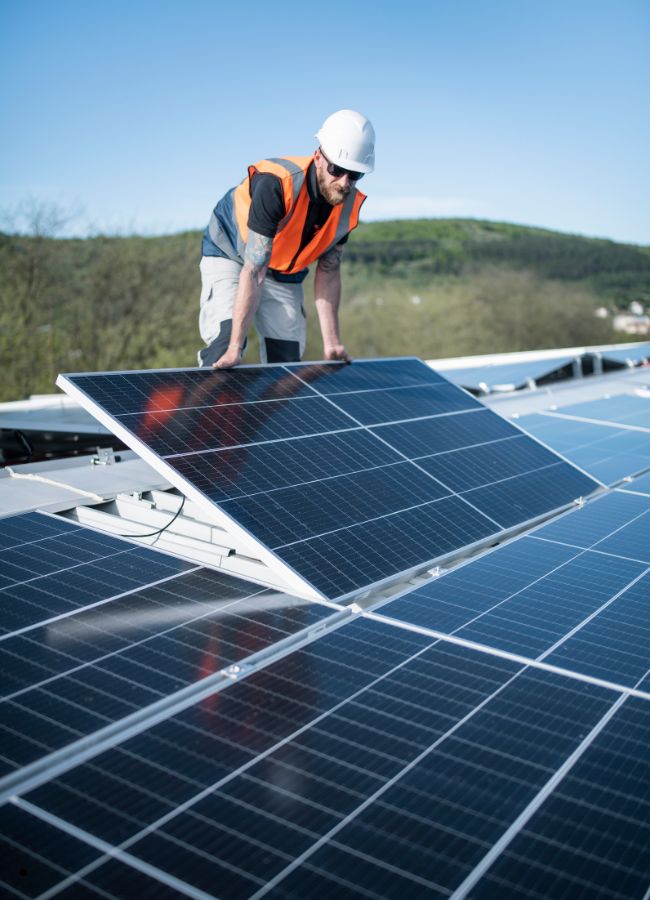
As businesses worldwide face rising energy costs and growing pressure to be more sustainable, many are making a smart switch to solar power. It’s not just about being “green” anymore; it’s a strategic move that saves money, boosts a company’s reputation, and helps the planet.
Unlike the solar panels you might see on your neighbour’s roof, commercial installations are a whole different ballgame. They’re larger, more powerful, and custom-built to handle the massive energy needs of factories, warehouses, and other big operations. But before a company can flip the switch and start generating its own clean energy, it needs to understand the process, what a professional installer does, and the real-world pros and cons of going solar.
Commercial Solar Panel Installer – Due to the recent widespread use of solar technology, both big businesses and private individuals have chosen to include solar energy in almost all residences and commercial buildings.
What is a Commercial Solar Panel Installer in Australia?
A Commercial Solar Panel Installer in Australia is a licensed and accredited professional or company that specialises in designing and installing large-scale solar power systems for businesses, factories, and other non-residential properties. They must hold an Electrical Licence and accreditation from an organisation like Solar Accreditation Australia (SAA) to comply with Australian standards and government rebate schemes.
These installers handle complex tasks like structural assessments, bespoke system design for high energy demands, grid connection approvals, and managing safety for large rooftop projects. Their expertise is crucial for businesses to maximise energy savings and ensure a long-lasting, compliant installation.
When determining whether to convert your home to a solar system, there are other factors to take into account besides solar power’s renewable and environmentally beneficial energy source. Even if the top solar businesses streamline the process, installing solar panels is still a drawn-out, intricate procedure with many moving parts to take into account.
Thus, it is essential to choose an efficient commercial solar panel installer for your business. [Commercial Solar Panel Installer]
If you’re considering installing solar power in your business to reduce your carbon footprint and electricity costs, our information on the benefits of solar energy might help you determine whether this is a viable option for you.
What do you understand about solar power?
Solar energy is energy converted from sunlight into electrical or thermal form. Photovoltaic (PV) cells, which are composed of semiconductor materials like silicon, are used in solar panels to collect solar photons, which are elementary particles. The photons that are captured by the panel cause the semiconductor material’s atoms to liberate electrons, and the movement of these electrons within the cell produces an electric current that can be directed into our circuits.
Anywhere there is a lot of sunlight, like open fields or rooftops, can have solar panels installed. The panels have a greater capacity to produce power the more light they are exposed to.
Choosing an effective commercial solar panel installer will make this task easier and faster.
We can gather, convert, and use the photons that the sun continuously releases to power our globe, but for you, the issue might be more one of economics. Is solar energy efficient enough to run your house or company? Let us find out.
Pros and Cons of Commercial Solar Panel Installations
The primary pro is the significant financial saving, as commercial solar can offset a large percentage (often up to 70%) of soaring daytime electricity bills, leading to rapid payback periods, often within 3-5 years. Additionally, businesses benefit from government incentives like the Federal STC scheme and tax benefits, along with enhanced brand reputation through demonstrated sustainability.
However, the main con is the high initial capital investment, which can be substantial for large-scale systems and requires careful financial planning. Other drawbacks include regulatory complexity for larger systems (over 100kW), the need for suitable, unshaded roof space, and the intermittency of solar generation, which may require an expensive battery solution to provide consistent power outside of daylight hours.
Benefits of commercial solar panel installation
Going solar is more than just a trend for businesses, it’s a powerful financial and environmental strategy. For companies, a solar panel installation means a significant drop in monthly electricity bills, providing a stable, predictable energy cost for decades to come. Beyond the impressive savings, it’s a statement to customers and competitors that your business is committed to a sustainable future, boosting your brand image and attracting new clientele.
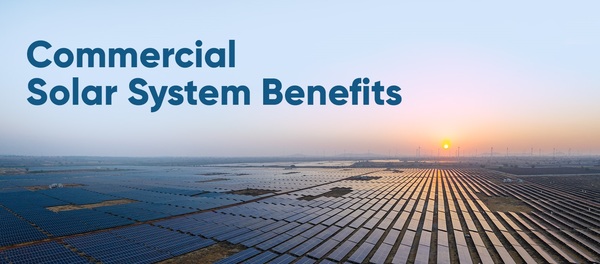
Ultimately, it’s an investment that pays for itself, offering long-term energy independence and a strong competitive edge in a rapidly changing market. What advantages do you get by having an efficient commercial solar panel installer?
Source of renewable energy
When fossil fuels are used to produce energy, toxic pollutants are released into the atmosphere, and fossil fuels are still a finite resource. We can reduce our reliance on fossil fuels and the environmental damage we cause by using solar power.
Lower electric bills
Most users may power their houses with solar energy as an additional or replacement for grid-supplied electricity. Customers that switch to solar energy could save a significant amount on their monthly power bills, especially with the rising cost of electricity.
Energy self-sufficiency
A solar-only home has the ability to run completely off the grid, particularly if it is combined with a solar battery system to provide electricity throughout the night. In the event of a power outage, these battery solutions can also convert solar systems into emergency backups.
Homes with solar panels are worth more
As per the National Renewable Energy Laboratory, your home’s worth rises by $20 for every dollar you save on electricity costs when you install solar panels. Furthermore, houses with solar panels fetch 4% more at auction than houses without them. A property with solar panels will benefit its owners in the long run by saving money and will also increase in value and charm.
Extended-duration savings
A solar system’s startup expenses are a substantial outlay, but they are typically offset by lower electricity bills. Usually within six to ten years, consumers can break even on their investment and begin to enjoy the benefits well before the system requires significant maintenance or replacement. Therefore, a good commercial solar installer can help you save more on your electricity expenses.
Minimal upkeep costs
As long as it’s not impacted by the environment, a solar system needs very minimal maintenance after installation. Panels should operate for many years without further intervention from the user if they are maintained clean and clear of debris.
Sustainability of solar energy
Without a doubt, solar energy is still more sustainable than fossil fuels, which have finite supplies and emit dangerous greenhouse gasses into the atmosphere when they are used. The lack of raw materials needed to develop solar technology, the greenhouse gasses released during production, and the environmental effects of panel disposal are the main factors restricting the sustainability of solar energy as a whole.
However, during four years of use, using solar electricity instead of grid power offsets the emissions and carbon footprint of production. Furthermore, since solar panels are composed of silicon, metal, and glass, they can eventually be recycled. We don’t currently have the necessary infrastructure in place to gather and make large-scale recycling easier.
Final thoughts
Find expert commercial solar panel installer details in Australia. Learn how professional solar energy installation can reduce business costs, boost sustainability, and deliver long-term energy savings for your commercial property.
The cost of solar energy is justified. However, a number of factors, such as your location, tax breaks and incentives, and the availability of net metering, will determine whether or not it’s the best option for you. The viability of a solar enterprise will depend on the consumer’s financial status, living arrangement, and available space, even though the benefits greatly exceed the drawbacks.