How to properly Install Commercial Solar for full benefits in Australia?
Installing commercial solar has become one of the cleverest long-term investments for Australian businesses. Whether you run a warehouse, retail complex, farm, or corporate office, switching to solar can intensely reduce your electricity bills, increase sustainability, and progress your company’s environmental performance.
However, to secure thoroughgoing returns, it’s significant to appreciate how to properly Install Commercial Solar for full benefits in Australia. This guide breaks down every vital step from planning and design to installation, incentives, and long-term optimisation.
Understanding Commercial Solar in Australia
Australia receives some of the world’s highest solar radiation, making it an ideal place for businesses to harness renewable energy. Commercial solar systems are specifically designed to handle the heavier and more consistent energy demands of enterprises.
What Makes Commercial Solar Different from Residential Systems?
Commercial solar setups usually involve larger system sizes, three-phase power, roof-mount or ground-mount arrays, and advanced energy monitoring. They’re engineered to operate efficiently during business hours when energy usage is highest.
Why Australian Businesses Are Shifting to Solar Power?
Australian businesses are increasingly shifting to solar power as a strategic move to cut rising operational costs and reduce their carbon footprint. Leveraging the country’s abundant sunshine, companies are installing commercial rooftop systems to achieve greater energy independence and protect themselves from volatile grid prices.
This move is supported by government incentives and enhanced by the falling cost and improved efficiency of solar technology, making it a compelling financial and environmental investment.
- Rising electricity prices
- Long-term savings and quick payback periods
- Zero-interest financing options
- Corporate sustainability targets
- Attractive government incentives
By adopting solar, companies can cut thousands of dollars in annual energy costs while strengthening their green credentials.
Key Factors to Consider Before Installing Commercial Solar
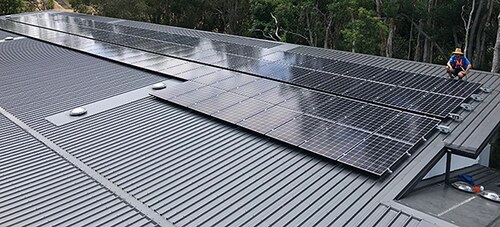
Before installing commercial solar, businesses must perform a thorough site assessment to confirm the roof’s structural integrity and evaluate its unshaded space for optimal panel placement and maximum energy capture.
A critical financial factor is calculating the Return on Investment (ROI) and the payback period, which depend on upfront costs, your current electricity usage, the local utility’s net metering policy, and obtainable government incentives.
Lastly, selecting high-quality, efficient equipment and a trustworthy installer with a strong track record and robust warranties is essential for long-term performance and minimal maintenance costs over the system’s 25+ year lifespan. Before installation, a careful pre-assessment helps avoid costly mistakes.
Energy Usage Analysis for Business Operations
An Energy Usage Analysis, or energy audit, is the critical first step before installing commercial solar, as it precisely determines where, when, and how much electricity a business consumes.
By analyzing historical utility bills and using smart meters or data loggers, the audit establishes a baseline consumption pattern, revealing peak demand times, seasonal variations, and specific equipment that are energy “hogs.”
This data is essential for accurately sizing the solar system to match the business’s actual needs, maximizing self-consumption, and ensuring the greatest possible return on investment (ROI).
Understanding your energy patterns is crucial. Businesses habitually have steady daytime loads, which solar can offset effectively.
Roof Suitability & Structural Integrity Checks
A qualified installer should examine:
- Roof age
- Angle and orientation
- Shading issues
- Weight load capacity
Climate, Sunlight, and Panel Efficiency in Australia
Different Australian states receive varying solar exposure. This influences panel selection and expected performance.
Step-by-Step Guide: How to properly Install Commercial Solar for full benefits in Australia

This section outlines the complete installation process to help businesses achieve maximum efficiency and return on investment.
Step 1 – Conducting a Solar Feasibility Audit
A feasibility audit includes:
- Detailed energy assessment
- Site inspection
- Shading analysis
- Financial modelling
- Payback period calculation
Step 2 – Choosing the Right Commercial Solar Panels
Common panel types:
- Monocrystalline – highest efficiency
- Polycrystalline – cost-effective
- Thin-film – great for large roofs
Choose Tier-1 panels from reputable manufacturers for longevity.
Step 3 – Selecting a CEC-Accredited Solar Installer
A Clean Energy Council (CEC) accredited installer ensures:
- Compliance with Australian standards
- High-quality workmanship
- Warranty protection
Step 4 – Designing a Business-Optimized Solar System
A well-designed system should match:
- Peak energy demand
- Available sunlight hours
- Future growth
- Budget
Step 5 – Installation Process Explained
The installation includes:
- Mounting panel frames
- Securing panels
- Wiring inverters and isolators
- Safety checks
Step 6 – Grid Connection and Testing
Your installer submits paperwork to connect the system to the grid. Final testing ensures everything runs safely and efficiently.
Government Incentives & Rebates for Commercial Solar in Australia
Australia’s primary incentive for commercial solar is the Small-scale Technology Certificate (STC) scheme, which offers an upfront discount on systems under 100 kW in size, significantly lowering the initial investment cost.
For larger systems over 100 kW, businesses can register to earn Large-scale Generation Certificates (LGCs), which provide an ongoing revenue stream as the system generates power over time.
Additionally, federal tax incentives like the Instant Asset Write-Off and accelerated depreciation allow eligible small businesses to immediately deduct or quickly write off the system’s full cost, further boosting the financial returns.
Small-Scale Technology Certificates (STCs)
STCs function as upfront rebates that reduce installation costs.
Large-Scale Generation Certificates (LGCs)
Suitable for larger systems over 100kW.
Maximizing the Full Benefits of Commercial Solar
To make the most of your solar investment, consider these enhancements.
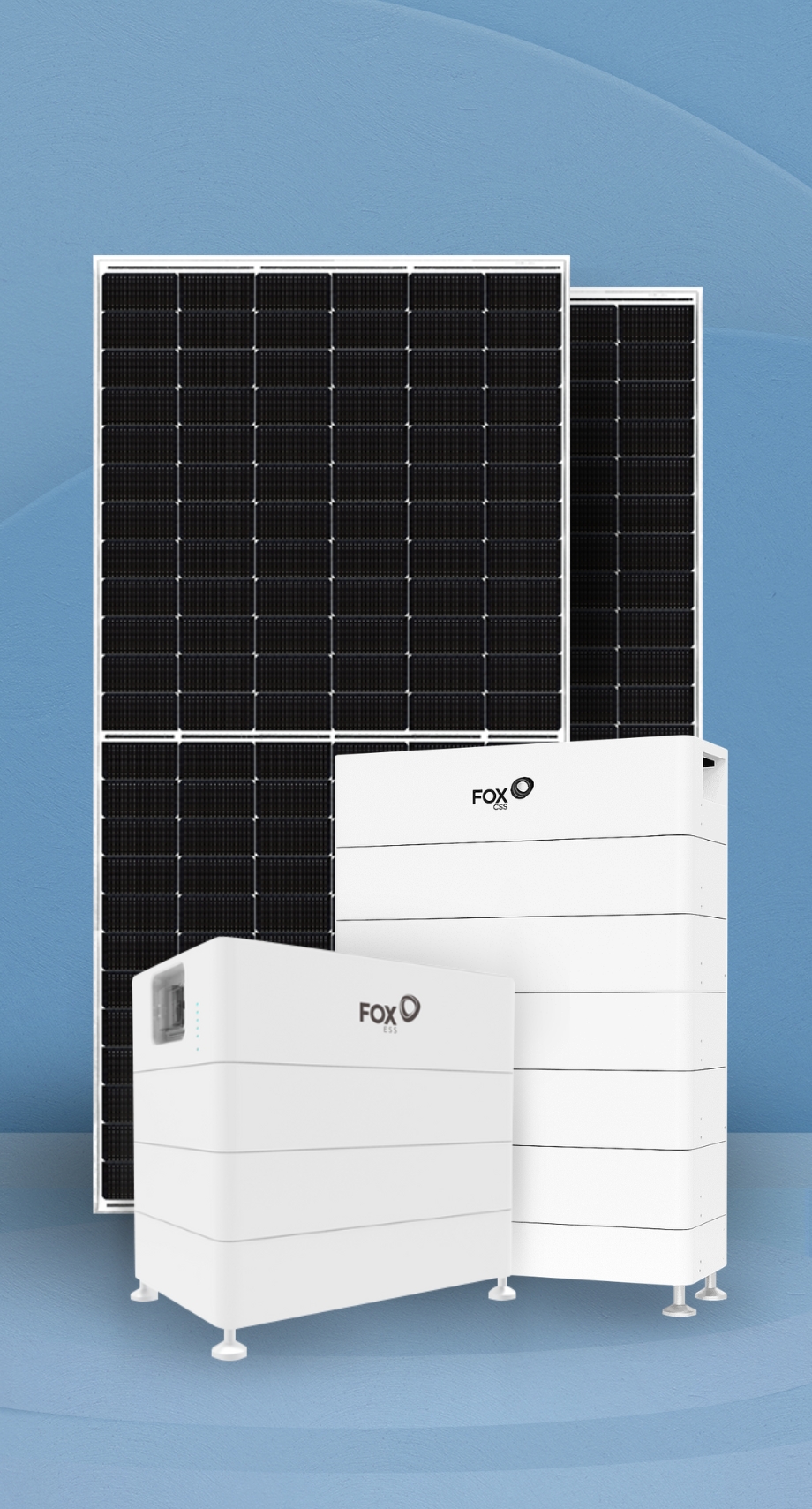
On-site Battery Storage for Peak Demand
Batteries help:
- Store excess energy
- Reduce demand charges
- Improve energy independence
Smart Monitoring Systems for Business Efficiency
Digital monitoring provides real-time insights into:
- Energy generation
- Consumption patterns
- System faults
Maintenance Tips to Keep Your Solar Operating at 100%
- Clean panels twice a year
- Inspect wiring
- Review monitoring alerts
Cost, ROI & Payback Period for Commercial Solar in Australia
Average Cost Per kW
Commercial solar ranges from $1,000 to $1,300 per kW, depending on system size and brand.
Factors that Influence Payback Period
- Sunlight exposure
- Business operating hours
- Electricity tariffs
- Whether batteries are included
Payback periods are typically 3–5 years.
Common Mistakes to Avoid During Commercial Solar Installation

A common mistake is inadequately sizing the system, either undersizing it, which fails to cover the business’s full energy requirements, or oversizing it, which unnecessarily increases cost and extends the payback period.
Businesses often neglect to check the roof’s structural integrity or the impact of shading from nearby obstructions, both of which severely reduce long-term performance and efficiency.
Lastly, cutting corners by choosing a low-cost installer over one with a proven track record, quality components, and comprehensive warranties risks sub-par electrical work and premature system failure.
Choosing Cheapest Systems Instead of Reliable Brands
Cheap systems often underperform or fail early.
Ignoring Warranty & Insurance Requirements
Always choose systems with a minimum 10-year product warranty and 25-year performance guarantee.
FAQs About Commercial Solar in Australia
-
How long does a commercial solar installation take?
Most installations take 1–4 weeks, depending on system size.
-
Do commercial solar panels work during cloudy weather?
Yes, they still generate energy, though at reduced efficiency.
-
What size solar system does a business need?
It depends on annual electricity usage and roof space.
-
Can commercial solar eliminate electricity bills?
It can drastically reduce them, but full elimination requires batteries and smart load management.
-
Are solar batteries worth it for businesses?
Yes, especially for operations with high evening or nighttime demand.
-
How often should commercial solar be serviced?
Once every 6–12 months is recommended.
In Conclusion :
Understanding how to properly Install Commercial Solar for full benefits in Australia ensures your business gets the highest return on investment. By combining high-quality equipment, professional installation, and regular maintenance, you can unlock long-term savings, boost energy independence, and support a greener Australia.